Interstellar
Movies
About
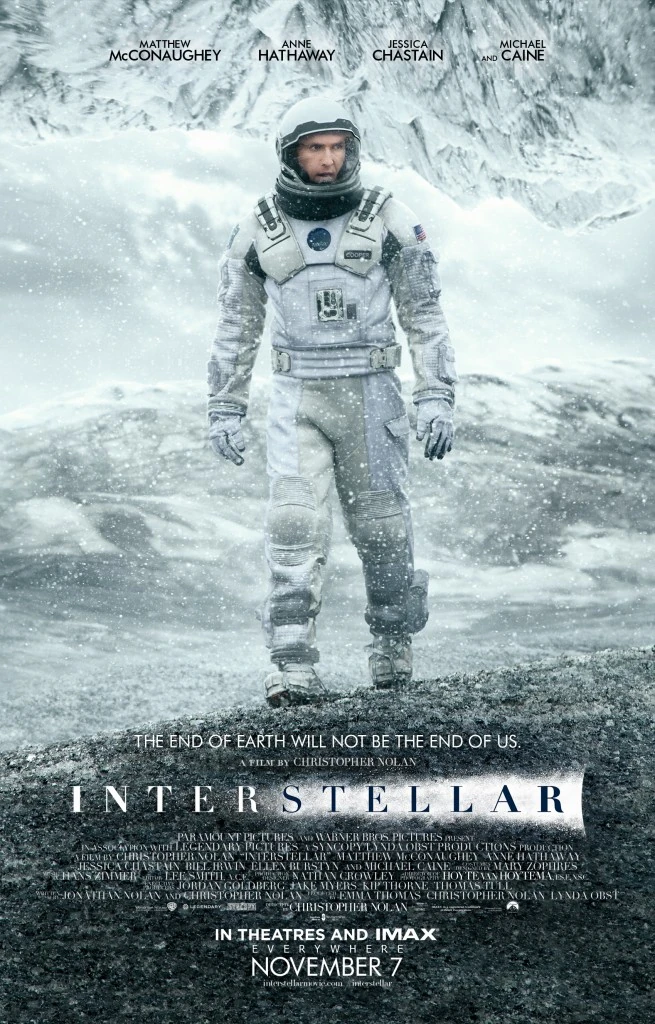
Interstellar is a science fiction film.

Blunt Score
88(+1.1%)
Public Sentiment
2dAs of March 27, 2026, the term Interstellar remains a dual-faceted cultural and scientific touchstone. In the public sphere, the 2014 film continues to generate significant discourse, recently fueled by a high-profile reunion between Timothée Chalamet and Matthew McConaughey, who discussed their experiences working with director Christopher Nolan and shared anecdotes from the set. The film’s legacy is further bolstered by screenwriter Jonathan Nolan, who is developing a new space opera incorporating unused concepts from the original production. Public interest has also been piqued by comparisons between the film and the upcoming Ryan Gosling-led adaptation of Project Hail Mary, with critics and fans debating the scientific merits and narrative styles of both works. Beyond cinema, the term has expanded into the music industry, with the Interstellar Groove Festival scheduled to return to Victoria, Australia, in late 2026. Simultaneously, the scientific community is captivated by the interstellar comet 3I/ATLAS. Recent data from NASA’s SPHEREx mission and other astronomical surveys have revealed that the object is rich in organics and contains water with heavy hydrogen isotope ratios significantly higher than those found in Earth's oceans. These findings, alongside the discovery of a cosmic tunnel linking our solar system to others and the observation of comets like C/2024 Wierzchoś being ejected into deep space, have intensified discussions regarding potential intercept missions for 3I/ATLAS. These developments, ranging from pop culture reunions to the study of deep-space travelers, ensure that the concept of interstellar exploration remains at the forefront of both entertainment and astrophysics.
Score Breakdown
 Blunt Users
100
 Grok
Grok92
 ChatGPT
85
 Gemini
85
 Llama
Llama85
Reviews
DRAG TO SCORE
DRAG TO SCORE
Related
Interstellar is a science fiction film.
DRAG TO SCORE
Public Sentiment
2dAs of March 27, 2026, the term Interstellar remains a dual-faceted cultural and scientific touchstone. In the public sphere, the 2014 film continues to generate significant discourse, recently fueled by a high-profile reunion between Timothée Chalamet and Matthew McConaughey, who discussed their experiences working with director Christopher Nolan and shared anecdotes from the set. The film’s legacy is further bolstered by screenwriter Jonathan Nolan, who is developing a new space opera incorporating unused concepts from the original production. Public interest has also been piqued by comparisons between the film and the upcoming Ryan Gosling-led adaptation of Project Hail Mary, with critics and fans debating the scientific merits and narrative styles of both works. Beyond cinema, the term has expanded into the music industry, with the Interstellar Groove Festival scheduled to return to Victoria, Australia, in late 2026. Simultaneously, the scientific community is captivated by the interstellar comet 3I/ATLAS. Recent data from NASA’s SPHEREx mission and other astronomical surveys have revealed that the object is rich in organics and contains water with heavy hydrogen isotope ratios significantly higher than those found in Earth's oceans. These findings, alongside the discovery of a cosmic tunnel linking our solar system to others and the observation of comets like C/2024 Wierzchoś being ejected into deep space, have intensified discussions regarding potential intercept missions for 3I/ATLAS. These developments, ranging from pop culture reunions to the study of deep-space travelers, ensure that the concept of interstellar exploration remains at the forefront of both entertainment and astrophysics.
Score Breakdown
Blunt Users100
Grok92
ChatGPT85
Gemini85
Llama85
Related