Blunt Score
80%
Moon
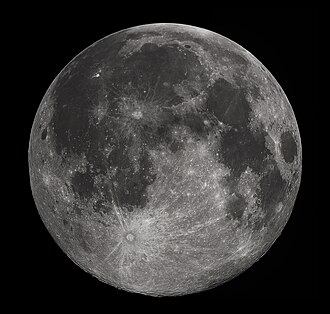
The Moon is Earth's sole natural satellite and nearest large celestial body.
Last Updated: 1d2.6%
Latest News
As of April 20, 2026, the Moon has returned to the forefront of global attention following the successful April 10 splashdown of NASA’s Artemis II mission, which marked the first human flight around the lunar surface in over 50 years. Public support for lunar exploration has surged to 69%, reflecting a significant shift in sentiment as international interest grows regarding the establishment of permanent bases and the environmental impact of human activity on the satellite.
 Llama
Llama85%
 ChatGPT
78%
 Gemini
78%
 Grok
Grok78%
Rating Analysis
The Moon, Earth's sole natural satellite, has returned to the forefront of global public attention following the successful conclusion of NASA’s Artemis II mission. On April 10, 2026, the mission officially ended with the splashdown of the Orion spacecraft, marking the first time humans have flown around the Moon in over 50 years.
The mission, which launched on April 2, 2026, has been widely celebrated as a historic milestone, with social media users expressing "moon joy"—a term coined to describe the intense excitement surrounding the return to lunar exploration. Prior to this, on April 1, 2026, the public observed a "Full Pink Moon," which appeared as a supermoon near the horizon, further heightening interest in the celestial body.
Public perception of the Moon and lunar exploration has shifted significantly toward enthusiasm in recent months. While a 2019 AP-NORC poll previously indicated that Americans favored Mars missions over lunar returns by a margin of 37% to 18%, recent sentiment has unified around the Artemis II mission.
Current polling shows that 69% of respondents now believe it is important to return astronauts to the Moon. This marks a notable evolution from historical skepticism; for instance, a May 1961 Gallup Poll revealed that 58% of Americans were opposed to the original manned lunar missions when they were first conceived.
The Moon’s reputation as a site of scientific potential is currently balanced against growing concerns regarding human impact. Since at least November 2023, experts have raised alarms about the accumulation of human-made litter on the lunar surface, a byproduct of decades of space exploration.
Furthermore, as NASA and other international entities, including China, express interest in establishing permanent bases and mining operations, a robust public and ethical debate has emerged. Discussions on platforms like Reddit and in academic circles frequently center on the ethics of lunar colonization, the potential for "political BS" to be exported to space, and the necessity of international laws for lunar conservation.
Historically, the Moon has been recognized since prehistoric times as the brightest object in the sky after the Sun. Scientific consensus, as noted in November 2025, attributes the Moon's formation to a massive collision between Earth and a protoplanet named Theia.
Beyond its scientific and cultural significance, the Moon is frequently studied for its physical properties, such as its gravity, which is notably lower than Earth's, creating the "bouncy" movement observed in astronaut footage. Despite its status as a celestial neighbor, the Moon remains a subject of intense scrutiny regarding its environmental future and the long-term implications of human presence on its surface.
Reviews
DRAG TO SCORE
Score over time
Not enough history yet
Blunt Score
80%
AI Average
80%
Users Average
—
Metadata
At a glance
- Classification
- Added
- 18d
- AI models
- 4
- AI avg
- 80%
Moon
Space
80%
Score
The Moon is Earth's sole natural satellite and nearest large celestial body.
DRAG TO SCORE
Why this score?
2.6As of April 20, 2026, the Moon has returned to the forefront of global attention following the successful April 10 splashdown of NASA’s Artemis II mission, which marked the first human flight around the lunar surface in over 50 years. Public support for lunar exploration has surged to 69%, reflecting a significant shift in sentiment as international interest grows regarding the establishment of permanent bases and the environmental impact of human activity on the satellite.
Reviews
Score Analysis
Llama85%
ChatGPT78%
Gemini78%
Grok78%
Related