Blunt Score
96%
Wanderer Above the Sea of Fog
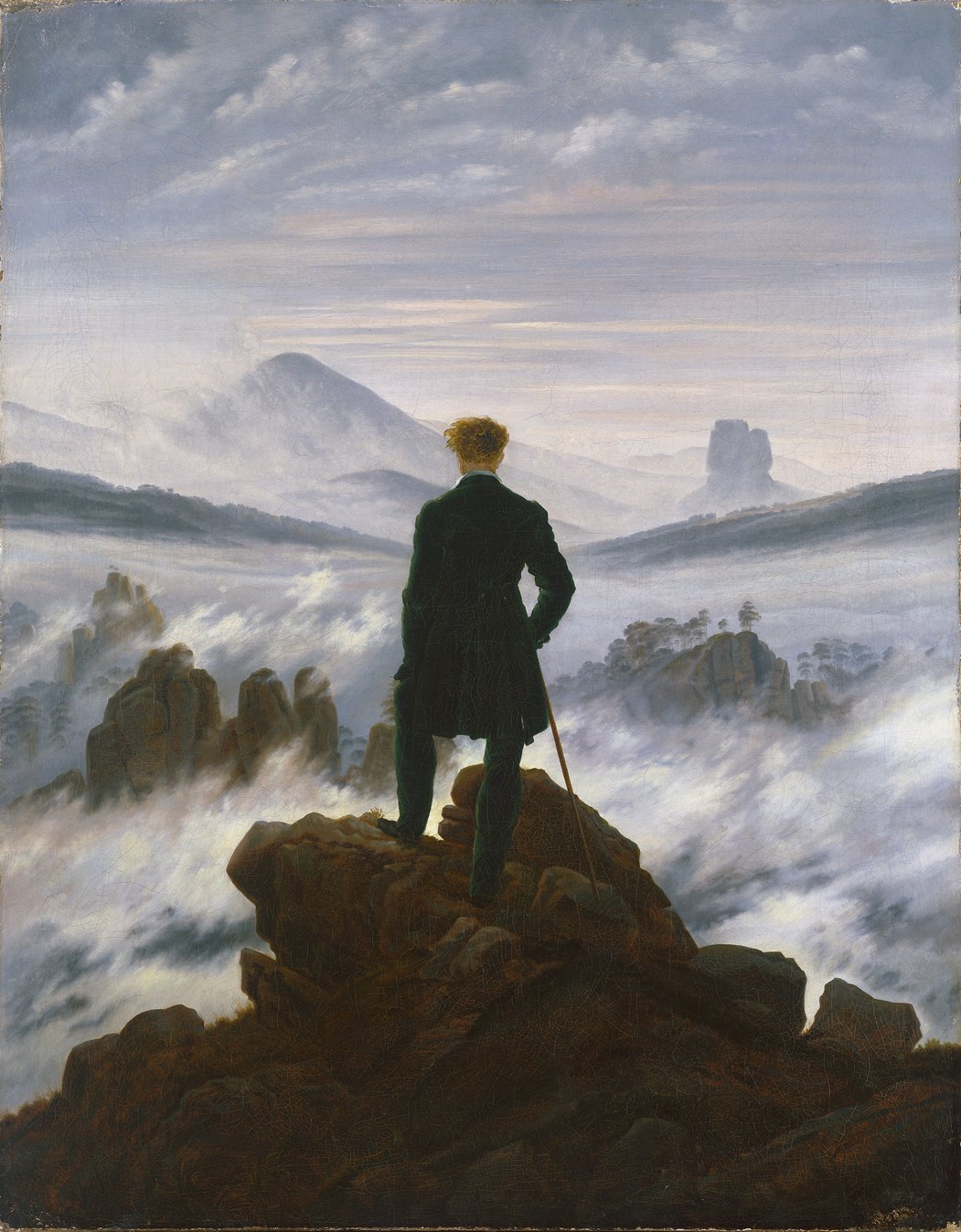
Wanderer Above the Sea of Fog is an 1818 oil painting by German Romanticist artist Caspar David Friedrich.
Last Updated: 7h3.2%
Latest News
As of April 19, 2026, the Hamburger Kunsthalle has announced a major exhibition featuring Caspar David Friedrich’s 1818 masterpiece, Wanderer Above the Sea of Fog, scheduled to open in August 2026. The painting remains a cornerstone of international art discourse, recently highlighted by Britannica in March 2026 as the definitive icon of the Romantic era.
 Blunt Users
94%
 Llama
Llama98%
 Gemini
95%
 Grok
Grok94%
Rating Analysis
As of April 2026, Wanderer Above the Sea of Fog (1818) remains a focal point of international art discourse, with the Hamburger Kunsthalle announcing plans for an exhibition featuring the work in August 2026. The painting continues to be a subject of academic and public interest, with recent coverage in March 2026 by Britannica highlighting its status as one of the most significant works of the Romantic era.
The painting’s prominence has been bolstered by a series of high-profile exhibitions, including a major retrospective at The Metropolitan Museum of Art in New York, which featured the work as a centerpiece loan from the Hamburger Kunsthalle, as noted in May 2025. Public perception of the painting is overwhelmingly positive, frequently citing it as the most famous German painting of the 19th century.
On social media platforms like Reddit and Instagram, users consistently engage with the work, often discussing its philosophical implications, such as its perceived connection to Friedrich Nietzsche’s concept of the Übermensch. The painting has also achieved a degree of modern pop-culture recognition, with users frequently noting its inclusion as one of the original paintings featured in the video game Minecraft.
Critics and art historians continue to praise the work for its "Gothic melancholy" and its ability to evoke the "sublime," with many observers noting that the painting’s enduring appeal lies in its ambivalence, which leaves the interpretation of the central figure’s intent entirely to the viewer. Historically, the painting has been recognized as the definitive icon of German Romanticism.
Since its creation circa 1817–1818, it has served as a primary reference point for the Rückenfigur technique—a compositional device where a figure is seen from behind, inviting the viewer to identify with the subject’s perspective. This technique has been widely influential, with contemporary artists, such as Tseng Kwong Chi in his 1987 photography, explicitly quoting the composition to evoke similar themes of isolation and contemplation.
The painting’s legacy has been marked by a long-term, intense scholarly effort to identify the man depicted on the rocky outcrop, a mystery that has persisted for centuries. While the artist’s broader legacy has faced periods of fluctuation, the painting itself has remained a constant in art history curricula and museum collections.
It is frequently analyzed alongside other Friedrich masterpieces, such as Chalk Cliffs on Rügen and The Sea of Ice, and is consistently cited as a quintessential example of the artist’s ability to translate internal emotional states into vast, unfathomable landscapes.
Reviews
DRAG TO SCORE
Score over time
Not enough history yet
Blunt Score
96%
AI Average
96%
Users Average
94%
Metadata
At a glance
- Classification
- Added
- 21d
- AI models
- 3
- AI avg
- 96%
- Users avg
- 94%
Wanderer Above the Sea of Fog
Art
96%
Score
Wanderer Above the Sea of Fog is an 1818 oil painting by German Romanticist artist Caspar David Friedrich.
Last Updated: 7h3.2%
DRAG TO SCORE
Why this score?
3.2As of April 19, 2026, the Hamburger Kunsthalle has announced a major exhibition featuring Caspar David Friedrich’s 1818 masterpiece, Wanderer Above the Sea of Fog, scheduled to open in August 2026. The painting remains a cornerstone of international art discourse, recently highlighted by Britannica in March 2026 as the definitive icon of the Romantic era.
Reviews
Score Analysis
Blunt Users94%
Llama98%
Gemini95%
Grok94%